How DNS Works
The Domain Name System translates domain names into IP addresses and connects users to websites and services across the Internet.
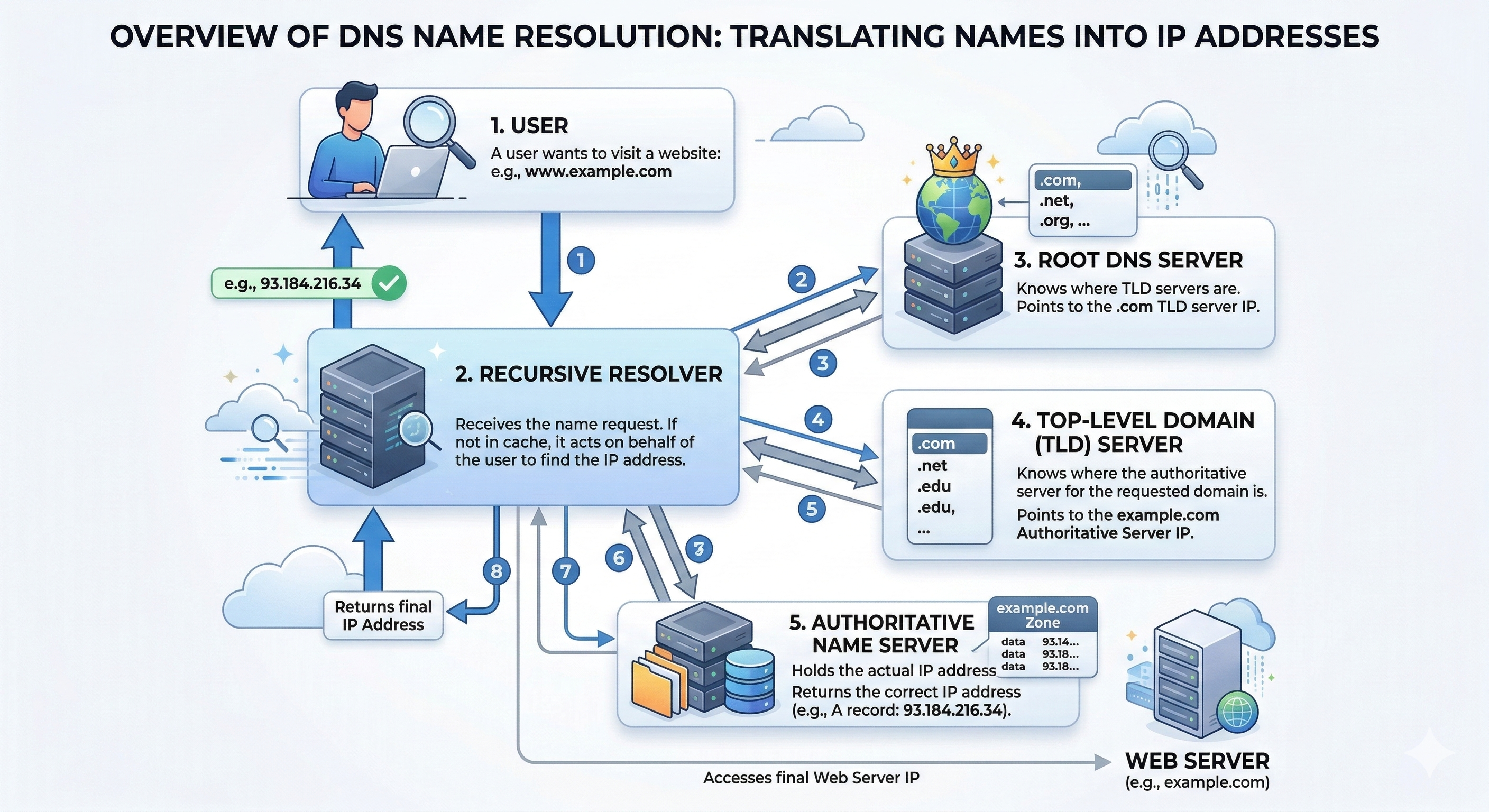
The Domain Name System translates domain names into IP addresses and connects users to websites and services across the Internet.
The Domain Name System (DNS) is the Internet’s distributed directory that maps human-readable domain names such as example.com to numerical IP addresses such as 93.184.216.34.
Without DNS, users would need to remember IP addresses for every website and service. DNS allows applications such as web browsers, email servers, and APIs to locate services using simple domain names.
Most DNS queries use the User Datagram Protocol (UDP) on port 53. UDP is fast and efficient, allowing DNS servers to answer millions of queries per second.
However, DNS responses sometimes exceed the size limit allowed by UDP packets. When this happens, the DNS server sets the TC (Truncated) flag in the response.
When a client receives a response with TC=1, it automatically retries the query using TCP.
DNS resolution involves two main types of servers: recursive resolvers and authoritative name servers.
A recursive resolver receives DNS queries from users or applications and performs the work of locating the correct DNS records.
Recursive resolvers typically belong to:
These resolvers cache DNS responses to improve performance and reduce the number of external queries required.
An authoritative DNS server stores the official DNS records for a domain.
These records include:
When a recursive resolver asks an authoritative server for information about a domain, the authoritative server returns the definitive answer.
When a user enters a domain name in a browser, the DNS resolution process typically follows these steps:
Traditional DNS queries are transmitted in clear text and can be observed by network operators or attackers monitoring the network path.
Several modern protocols provide encryption for DNS traffic:
These protocols encrypt DNS queries between the client and the resolver, improving privacy and protecting DNS traffic from interception.
DNS is one of the most critical components of Internet infrastructure. Every web request, email delivery, or API call depends on DNS resolution.
Because of its central role, DNS is also widely used for security monitoring, filtering, and threat detection. Technologies such as DNSSEC, RPZ, and Protective DNS help protect networks from malware, phishing domains, and command-and-control infrastructure.